
Switching to an EV: The Home Energy Shift
Switching to an electric vehicle (EV) is an exciting milestone. However, it brings a major shift in how you manage your household energy.
Most EVs come with a standard Level 1 charger that plugs into a regular 120-volt wall outlet. Unfortunately, these charging speeds are agonizingly slow. In fact, it often takes up to 20 hours or more to achieve a full charge.
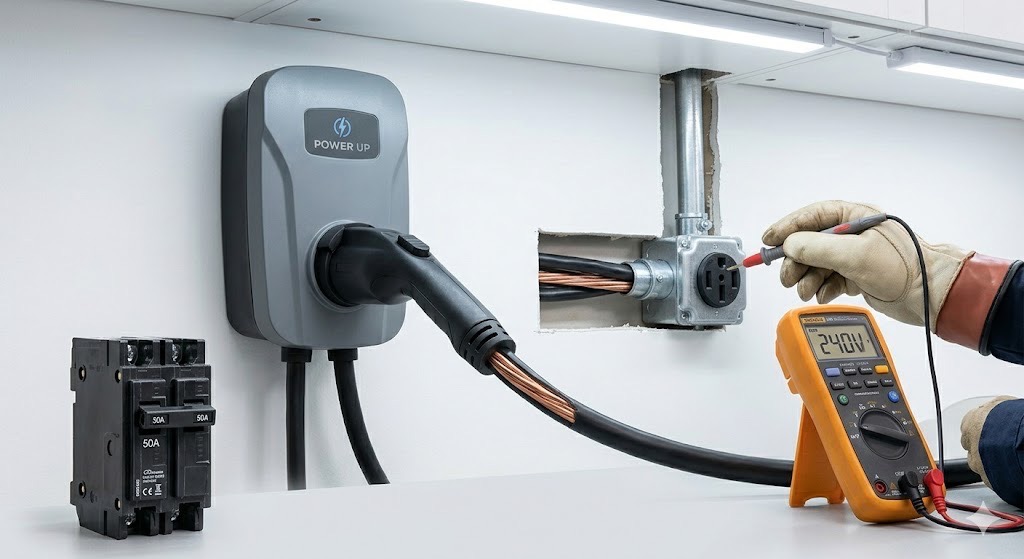
Consequently, a Level 2 home charging station is a necessity for practical, overnight charging. A Level 2 charger requires a 240-volt circuit, which is similar to what an electric clothes dryer uses. Therefore, before scheduling an installation, you must determine if your home’s electrical system can support the extra load.
Assessing Your Electrical Capacity
Most standard Level 2 chargers draw anywhere from 32 to 50 amps of electricity. To safely add this demand to your home, your electrical panel needs a sufficient power buffer.
100-Amp Panels
Many older homes operate on a 100-amp electrical service. If you use gas appliances for your stove, water heater, and dryer, you might have just enough room to squeeze in a Level 2 charger. Conversely, if your home is fully electric, a 100-amp panel will likely overload. This is especially true when your vehicle charger, air conditioner, and oven run simultaneously.
200-Amp Panels
This is the modern residential standard. If your home features a 200-amp service, you generally have plenty of overhead capacity. As a result, you can easily support a Level 2 EV charging station alongside your daily household appliances.
Why You Need an Electrical Audit
Before buying a charging unit, it is wise to have a licensed electrician conduct a professional load calculation. During this audit, the electrician will evaluate:
- Your home’s total square footage.
- Your existing large appliances.
- The exact number of amps currently being utilized.
If the final calculation shows you are near your safety limit, you will need a service panel upgrade. Upgrading from 100 to 200 amps ensures your new charger can be wired in safely.
The Benefits of Professional Installation
It can be tempting to treat an EV charger as a simple DIY weekend project. However, 240-volt wiring carries extreme risks if it is handled incorrectly.
Hiring a professional electrician ensures your system is safe because they will verify that:
- The wire gauge is correct: This prevents dangerous overheating over long, continuous charging cycles.
- Permits are secured: All local electrical codes and permitting requirements will be fully met.
- Breakers are protected: Your charger will feature the proper circuit breaker protection to safeguard both your home and your vehicle’s sensitive battery.
Ultimately, taking a proactive and professional approach to your EV installation protects your investment and keeps your home safe.
