
Yes, an electric vehicle charger can be installed outdoors in Michigan when the equipment is approved for the location and the electrical work is properly designed. The charger, wiring method, mounting position and connection must be suitable for rain, snow, ice and temperature changes.
Outdoor charging is often the practical choice for homeowners without a garage or for households that park in a driveway. A licensed electrician can evaluate the property, panel capacity and cable route before recommending an installation plan.
Choose Equipment Rated for Outdoor Use
Not every charger is designed for exposure to weather. Review the manufacturer’s installation instructions and environmental rating. The charging connector, enclosure and cable should be suitable for the intended location and expected conditions.
An electrician verifies compatibility with the home’s electrical system and plans the circuit according to the equipment requirements and current rules for the jurisdiction.
Location Makes a Difference
The charger should be convenient to the vehicle without creating a tripping hazard or forcing the cable to stretch across a walkway. Snow storage, plowing, drainage, vehicle movement and the distance from the panel all affect the installation.
- Where the vehicle’s charging port will be parked
- Whether the cable can reach without crossing a sidewalk
- How snow and ice collect around the mounting area
- Protection from vehicle impact
- Access for future service
- The route for a dedicated electrical circuit
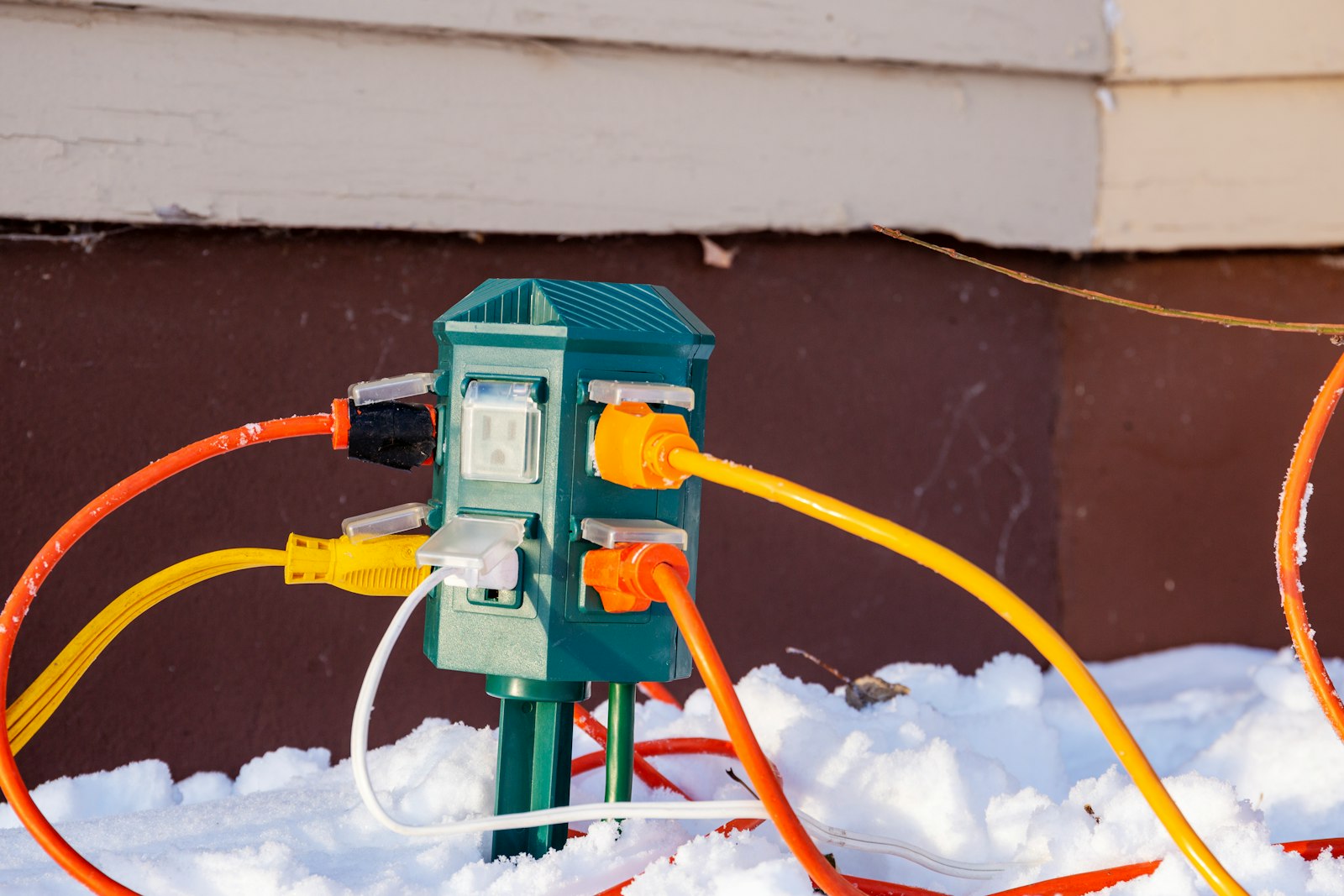
Winter Charging Considerations
Cold temperatures can affect vehicle range and charging behavior, but the electrical installation still needs to operate reliably in changing weather. Keep the connector stored as the manufacturer directs and clear snow without striking or burying the charger.
Do not use household extension cords or temporary wiring to reach an EV. Charging equipment draws sustained power and requires a professionally planned circuit.
Panel Capacity Comes First
Before installation, the electrician evaluates whether the panel has available capacity and space. The review also considers other large loads, including heating and cooling equipment, electric cooking, a hot tub or another EV charger.
Dustmen Electric provides EV charger installation and panel evaluations. Homeowners can also review what to know before installing a home EV charger.
Hardwired or Plug-In Installation
The appropriate connection depends on the charger, location and project design. Outdoor plug-in equipment requires a suitable receptacle and protection, while hardwired equipment is connected directly. A licensed electrician can explain which approach fits the property and charger.
Plan for a Reliable Charging Routine
A well-placed outdoor charger can make daily EV ownership convenient through every season. Planning the location and electrical capacity before purchasing equipment helps avoid surprises.
For EV charger installation in Troy and Southeastern Michigan, call Dustmen Electric at 248-632-1400 or request a free estimate.
