
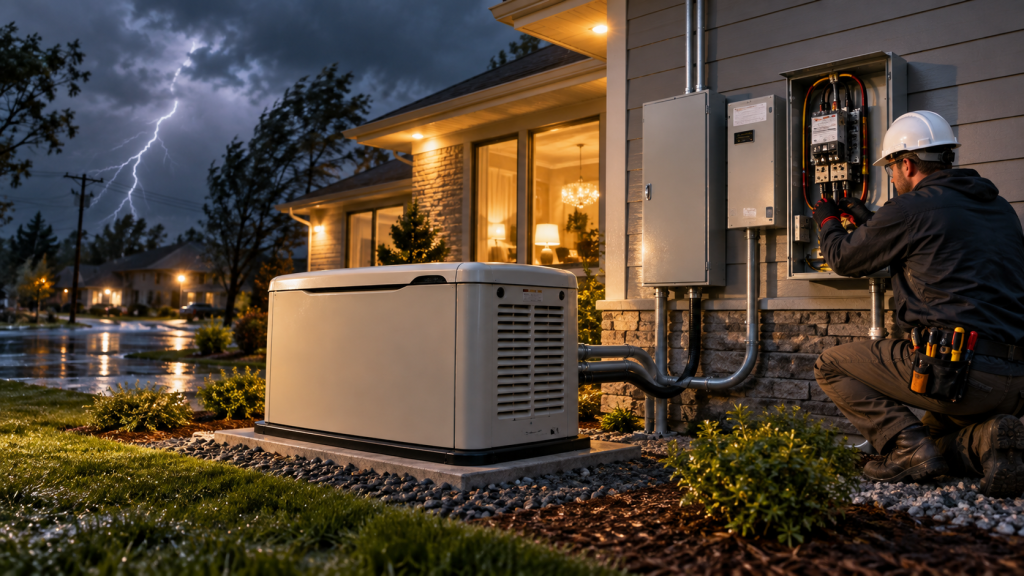
Power outages can happen at any time, especially during storms, high winds, winter weather, and grid strain. Many homeowners purchase portable generators or consider backup power systems to keep important items running. But a generator must be connected safely.
One of the most important parts of safe generator use is a properly installed transfer switch.
What Is A Generator Transfer Switch?
A transfer switch is a device that allows generator power to safely connect to selected circuits in your home. It separates your home from the utility grid while the generator is in use.
This matters because generator power should never feed backward into utility lines. Backfeeding can create serious hazards for utility workers, neighbors, your generator, and your home’s electrical system.
Why Extension Cords Are Limited
Some homeowners use extension cords during outages to power a refrigerator, phone charger, or small appliance. While this may work for very limited temporary use, it is not ideal for powering important home circuits.
Extension cords can become overloaded, damaged, or improperly used. They also do not power hardwired equipment such as furnaces, well pumps, sump pumps, certain lighting circuits, or other built-in systems.
A transfer switch provides a safer and cleaner solution.
What Can A Transfer Switch Power?
A transfer switch can be set up to power selected circuits, depending on generator size and your home’s electrical needs. Common priorities include refrigerators, freezers, sump pumps, furnace controls, essential lighting, outlets, internet equipment, and medical equipment.
A licensed electrician can help determine which circuits are most important and whether your generator is properly sized for the load.
Manual Vs. Automatic Transfer Switches
A manual transfer switch requires the homeowner to start the generator and manually switch selected circuits to generator power. This is common with portable generator setups.
An automatic transfer switch is typically used with standby generators. It detects a power outage and automatically transfers power to the generator system.
Both options must be properly installed to be safe and reliable.
Why Professional Installation Matters
Generator transfer switch installation involves your home’s electrical panel, utility power, generator connection, and selected circuits. This is not a DIY project.
Improper installation can damage appliances, overload circuits, create shock risks, or create dangerous backfeed. A licensed electrician can install the correct equipment and make sure the system is set up safely.
Dustmen Electric, L.L.C. provides electrical services for homeowners in Troy and Southeast Michigan. Learn more at dustmenelectricllc.com/services.
Transfer Switches Help During Storm Season
Southeast Michigan homeowners know that outages can happen during thunderstorms, wind events, ice, snow, and extreme weather. A transfer switch helps make generator use more practical when the power goes out.
Instead of running cords throughout the house, you can power selected circuits through a safer setup.
Plan Before The Next Outage
The best time to think about backup power is before you need it. Once storms arrive and outages happen, schedules can fill up quickly. Planning ahead gives you time to choose the right generator setup, identify essential circuits, and install the proper transfer switch.
Schedule Generator Transfer Switch Installation
A generator can be a useful tool, but only when it is used safely. A professionally installed transfer switch helps protect your home, your equipment, and the people working on the electrical grid.
Dustmen Electric, L.L.C. provides generator transfer switch installation, panel work, electrical repairs, and residential upgrades throughout Southeast Michigan.
To request a free estimate, visit our contact page or call 248-632-1400.
