
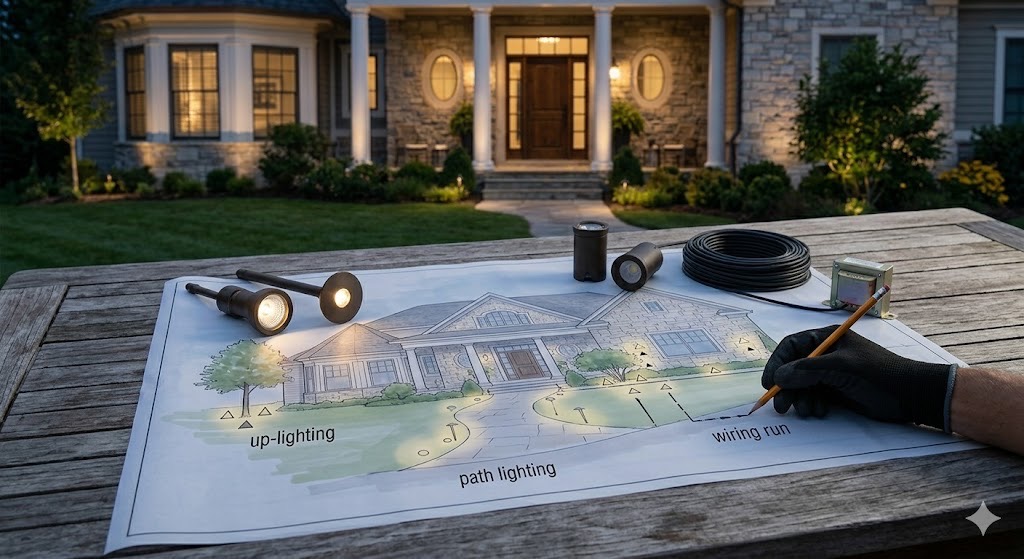
When investing in home improvement, it’s easy to focus entirely on the interior. However, the exterior of your home is what creates a first impression. Professionally designed landscape lighting completely transforms your property after dark, highlighting architectural features, increasing safety along walkways, and dramatically boosting your home’s curb appeal.
If you are planning an outdoor lighting upgrade, utilizing a low-voltage system (12-volt) is the smartest, safest, and most energy-efficient route to take. Here is how to plan your layout for stunning results.
Understanding the Core Techniques
Good landscape lighting isn’t about flooding your yard with blinding spotlights; it’s about creating depth, shadows, and focal points. Consider these popular design techniques:
- Up-Lighting: Placing fixtures at the base of architectural columns or large trees and pointing them upward creates dramatic shadows and emphasizes height.
- Path Lighting: Shielded fixtures directed downward along walkways and driveways offer clean, welcoming pools of light that prevent trips and falls without blinding visitors.
- Silhouetting: Positioning a light behind a unique plant or architectural feature projects its shape against a flat wall, creating a striking art-piece effect.
- Wall Washing: Placing a wide-angle fixture a few feet away from a textured wall (like brick or stone) delivers a soft, even glow that accentuates the home’s structure.
Why Choose Low-Voltage LED Systems?
In the past, outdoor lighting relied on high-voltage line power (120-volt), requiring deep trenches and heavy conduit to keep cables safe. Low-voltage systems change the game by using a transformer to step your home’s 120-volt power down to a safe 12 volts.
- Safety: If a lawnmower or shovel accidentally nicks a 12-volt wire, there is no risk of severe electrical shock.
- Energy Savings: Modern low-voltage systems utilize LED bulbs, which consume up to 80% less energy than traditional halogen bulbs and last for years without needing a replacement.
- Flexibility: Because the cables don’t need to be buried deeply, the system can easily be adjusted as your landscaping grows and changes over time.
Designing with Intention
When planning your layout, remember that less is often more. Start by identifying three to five key focal points—such as a beautiful front archway, a mature oak tree, or a stone pathway. Connect these focal points with softer transitional lighting to avoid dark patches, and ensure your fixtures blend seamlessly into your garden beds during the daytime.
